

Homeowners insurance is a financial protection policy that covers damage or loss to your home, personal belongings, and liability for injuries that occur on your property. Nearly all mortgage lenders require it as a condition of your loan, making it both a legal obligation and a financial safety net for most homeowners. The typical annual premium in 2026 runs approximately $1,695, with most deductibles landing around $1,135. Whether you are buying your first home or reassessing your current coverage, understanding what this policy does and does not cover is the difference between recovering from a disaster and absorbing a devastating financial loss.
What does homeowners insurance cover?
Standard homeowners policies cover six core areas: dwelling, other structures, personal property, liability, medical payments to others, and additional living expenses. Each area serves a distinct purpose, and knowing the limits of each one helps you avoid costly surprises after a loss.
Here is what each coverage area protects:
- Dwelling coverage pays to repair or rebuild the physical structure of your home, including walls, roof, and built-in appliances, when damage results from a covered event like fire or windstorm.
- Other structures coverage extends to detached garages, fences, and sheds on your property, typically at 10% of your dwelling coverage limit.
- Personal property coverage protects your furniture, electronics, clothing, and other belongings. High-value items like jewelry or art often have sub-limits, so a scheduled personal property endorsement may be needed.
- Liability protection covers legal costs and damages if someone is injured on your property or if you accidentally damage someone else’s property. You can read more about how liability coverage works to understand its full scope.
- Medical payments to others covers minor medical bills for guests injured at your home, regardless of fault, typically up to $5,000.
- Additional living expenses (ALE) pays for hotel stays, restaurant meals, and temporary rentals if your home becomes uninhabitable after a covered loss.
Two major risks are excluded from standard policies: flood damage and earthquake damage. Both require separate policies, and many homeowners in Massachusetts discover this gap only after a loss. Floods are excluded from standard homeowners coverage, so if you live near water or in a flood-prone area, a separate National Flood Insurance Program (NFIP) policy is worth serious consideration.
Pro Tip: Document your deductible amount and keep that exact sum in a dedicated savings account. When a covered loss occurs, you will need to pay that amount out of pocket before your insurer covers the rest.

What types of homeowners insurance policies exist?
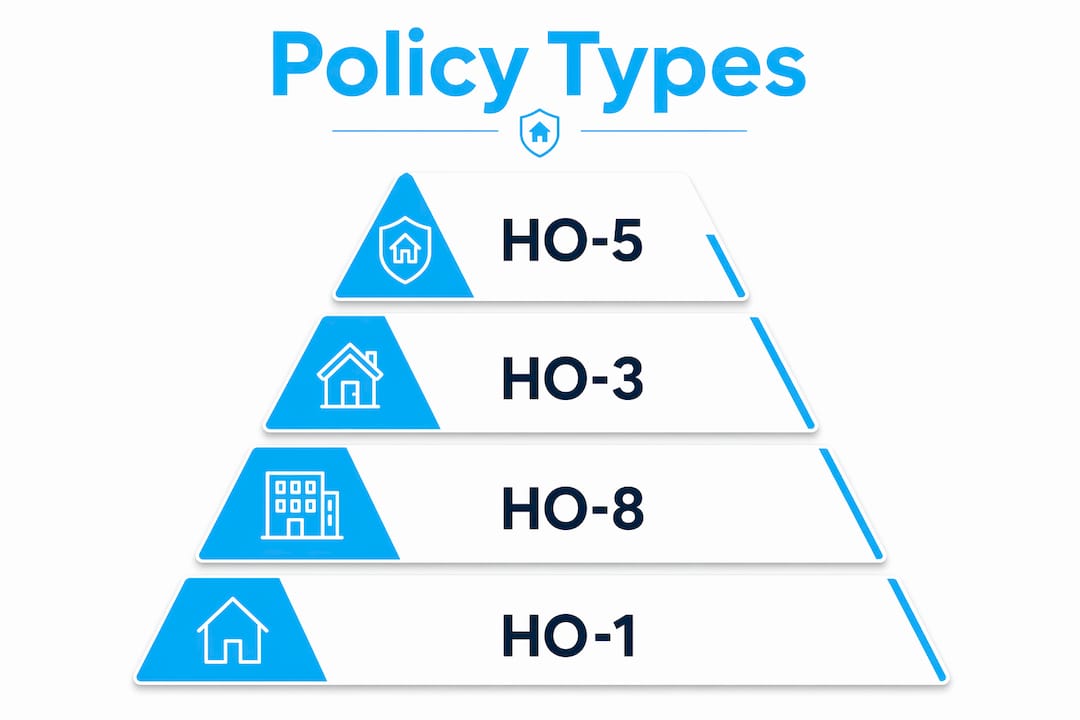
Eight standard policy forms exist for homeowners insurance, labeled HO-1 through HO-8, each designed for a specific type of home or homeowner. Choosing the wrong form can leave you with significant coverage gaps.
| Policy Form | Coverage Type | Best For |
|---|---|---|
| HO-1 | Basic named-peril | Rarely used; covers only 10 specific perils |
| HO-2 | Broad named-peril | Budget-conscious owners; covers 16 named perils |
| HO-3 | Open-peril (dwelling), named-peril (property) | Most single-family homeowners |
| HO-4 | Named-peril | Renters protecting personal belongings |
| HO-5 | Open-peril (dwelling and property) | High-value homes needing maximum coverage |
| HO-6 | Named-peril | Condo owners covering interior and belongings |
| HO-7 | Open-peril | Mobile and manufactured home owners |
| HO-8 | Modified replacement cost | Older or historic homes with high rebuild costs |
The HO-3 Special Form is the most widely purchased policy for single-family homes. It covers your dwelling on an open-peril basis, meaning all risks are covered except those specifically excluded, while your personal property is covered on a named-peril basis, meaning only listed events apply. This distinction matters more than most people realize. If you own a condo in Arlington, MA, an HO-6 policy covers your interior walls, fixtures, and belongings, while the condo association’s master policy handles the building exterior. Owners of older Victorian or colonial homes should look at HO-8, which uses modified replacement cost to account for the higher expense of rebuilding with period-appropriate materials.
You can compare homeowners insurance policy options to find the form that matches your home type and coverage goals.
How premiums, deductibles, and claims affect your finances
The cost of homeowners insurance is shaped by your home’s location, age, construction type, and the coverage limits you choose. The average annual premium sits at approximately $1,695 in 2026, with roughly half of policyholders carrying deductibles between $500 and $1,499.
| Factor | Lower Cost Option | Higher Cost Option |
|---|---|---|
| Deductible | $500 (higher premium) | $2,500 (lower premium) |
| Coverage basis | Actual cash value | Replacement cost |
| Claims history | No recent claims | Multiple recent claims |
| Home age | Newer construction | Older, unrenovated home |
Raising your deductible reduces your monthly premium but requires you to have that amount available when a loss occurs. A $2,500 deductible might save you $200 or more per year, but it also means absorbing that cost entirely before your insurer pays a cent. The math works in your favor over time only if you avoid filing small claims.
Filing frequent small claims is one of the fastest ways to trigger a premium increase or even policy non-renewal. Treat your policy as protection against major losses, not a reimbursement tool for minor repairs. A broken window or a small water leak is almost always better handled out of pocket.
Replacement cost coverage pays to rebuild or replace your home and belongings at today’s prices, without deducting for depreciation. Actual cash value coverage, by contrast, factors in the age and wear of your property before paying out. A 10-year-old roof with actual cash value coverage might pay out only 40% of replacement cost after depreciation. The upgrade to replacement cost coverage is one of the most financially meaningful decisions you can make when buying a policy.
Most mortgage lenders require coverage of at least 80% of your home’s replacement value. Falling below that threshold triggers a coinsurance penalty, which limits your claim payout even after a total loss. Review your dwelling coverage limit annually, especially after renovations, because construction costs have risen sharply in recent years.
Pro Tip: Use a home inventory app or record a walkthrough video of every room, including serial numbers on electronics and appliances. A detailed home inventory speeds up claims processing and helps you recover the full value of what you lost.
Common misunderstandings and coverage gaps to watch for
The most frequent reason homeowners face uncovered losses is misunderstanding open-peril versus named-peril coverage. Many people assume their policy covers everything. It does not.
Here are the most common coverage gaps Mfandtna sees among homeowners:
- Flood and earthquake exclusions. Standard policies never cover these events. Separate flood insurance through the NFIP or a private carrier, and a standalone earthquake policy, are required. Learn more about what storms and floods cover under a standard policy.
- Actual cash value vs. replacement cost confusion. Many homeowners do not realize they have actual cash value coverage until they file a claim and receive far less than expected.
- Personal property sub-limits. Jewelry, firearms, musical instruments, and collectibles often have per-item caps of $1,500 or less under a standard policy. A scheduled endorsement raises those limits.
- Home-based business equipment. If you run a business from home, your commercial equipment is typically excluded from personal property coverage.
- Sewer and drain backup. This is a separate endorsement that most standard policies do not include by default, yet it is one of the most common and costly water damage events.
Reviewing your common coverage gaps annually is the most reliable way to catch these problems before they cost you. A policy that worked perfectly when you bought your home three years ago may no longer match your current situation if you have added a home office, a pool, or a finished basement.
Practical tips for choosing and maintaining your coverage
Getting the right policy is a one-time decision. Keeping it right is an ongoing responsibility. Follow these steps to stay protected without overpaying:
- Set your deductible based on what you can actually afford to pay. A higher deductible saves money on premiums, but only if you have the funds available when you need them.
- Review your policy every year. Home values and construction costs change. Your coverage limits should reflect the current cost to rebuild, not the price you paid for the home.
- Update your policy after major improvements. A finished basement, new kitchen, or added square footage increases your home’s replacement cost. Failing to update your coverage leaves that investment unprotected.
- Create and maintain a home inventory. A video walkthrough stored in the cloud, updated annually, gives you a clear record of your belongings and their approximate value.
- Avoid filing small claims. Reserve your policy for losses that exceed your deductible by a meaningful margin. Frequent claims signal risk to insurers and can result in higher premiums or non-renewal.
- Purchase separate flood or earthquake coverage if your location warrants it. Check FEMA flood maps and your state’s seismic risk data to assess whether these policies make sense for your address.
- Work with an independent agent. Independent agents compare policies across multiple carriers, which gives you a broader view of your options than going directly to a single insurer.
Key takeaways
Homeowners insurance protects your home, belongings, and financial stability by covering major losses from fire, storms, theft, and liability, but it requires careful selection and regular review to work as intended.
| Point | Details |
|---|---|
| Six core coverage areas | Dwelling, other structures, personal property, liability, medical payments, and ALE form the foundation of every standard policy. |
| Eight policy forms exist | HO-3 suits most single-family homeowners; HO-4 covers renters; HO-6 covers condos; HO-8 suits older homes. |
| Choose replacement cost coverage | Replacement cost pays full rebuild value without depreciation, unlike actual cash value which reduces payouts based on age. |
| Avoid frequent small claims | Filing minor claims can trigger premium increases or non-renewal; reserve coverage for significant losses. |
| Review coverage annually | Update dwelling limits after renovations and rising construction costs to avoid the 80% coinsurance penalty. |
Why I think most homeowners misuse their policy
After more than three decades of helping homeowners in Massachusetts find the right coverage, the pattern I see most often is not underinsurance. It is misuse. Homeowners file claims for $800 roof repairs, then wonder why their premium jumps $300 the following year. They treat their policy like a home warranty, and it is not that.
The smartest homeowners I work with treat their policy as a catastrophic loss fund. They keep a savings buffer equal to their deductible, they file claims only when the loss is genuinely significant, and they review their coverage every fall before winter weather arrives. That discipline keeps premiums manageable and coverage intact when a real disaster strikes.
The other mistake I see constantly is assuming the policy you bought five years ago still fits. Construction costs in the Boston area have climbed sharply. If your dwelling coverage limit has not kept pace, you could be significantly underinsured without knowing it. A quick annual review with your agent takes 20 minutes and can prevent a six-figure shortfall after a total loss.
One more thing worth saying plainly: flood insurance is not optional if you live near water or in a low-lying area. I have seen homeowners lose everything in a basement flood and receive nothing from their standard policy because flood damage is categorically excluded. That is a painful and entirely preventable outcome.
— Mike
Get the right homeowners insurance with Mfandtna
Mfandtna has helped homeowners across Massachusetts and beyond find affordable, customized coverage for over 30 years. As an independent agency based in Arlington, MA, Mfandtna compares policies across multiple carriers to find the right fit for your home, your budget, and your specific risks.
Whether you are buying your first home, reassessing your current policy, or closing a coverage gap you just discovered, Mfandtna’s team gives you clear, pressure-free guidance. Get a free homeowners insurance quote today and see exactly what your coverage options look like. You can also explore Mfandtna’s homeowners insurance services to learn more about what is available for your property type and location.
FAQ
What is homeowners insurance in simple terms?
Homeowners insurance is a policy that pays to repair or rebuild your home, replace your belongings, and cover legal costs if someone is injured on your property. Most mortgage lenders require it as a condition of your loan.
Does homeowners insurance cover floods and earthquakes?
Standard homeowners policies exclude both flood and earthquake damage. You need separate policies for each, such as coverage through the National Flood Insurance Program for flood protection.
What is the difference between HO-3 and HO-5 policies?
An HO-3 policy covers your dwelling on an open-peril basis but covers personal property on a named-peril basis, while an HO-5 covers both on an open-peril basis, offering broader protection for high-value homes.
How does a deductible work in homeowners insurance?
Your deductible is the amount you pay out of pocket before your insurer covers the rest of a claim. A higher deductible lowers your annual premium but requires you to have that amount available after a loss.
Who needs homeowners insurance?
Any homeowner with a mortgage is typically required by their lender to carry homeowners insurance. Even homeowners without a mortgage benefit from coverage, since the financial cost of rebuilding after a fire or major storm far exceeds the annual premium.