
A property developer commercial insurance plan is a layered set of policies designed to protect your project from the specific risks that standard business insurance simply does not cover. We’re talking about environmental contamination discovered mid-excavation, design errors that surface years after a building opens, and third-party bodily injury claims during active construction. The right plan combines several policy types into one coordinated structure, and the coverage categories you need most include:
- General Liability (GL): Covers third-party bodily injury and property damage claims arising from your development site.
- Professional Indemnity / Errors & Omissions (E&O): Protects against financial loss from design or professional service errors, including Owner’s Professional Protective Indemnity (OPPI).
- Pollution Legal Liability Plus (PLLP): Addresses on-site and off-site pollution conditions, including legacy contamination on redevelopment sites.
- Contractor’s Pollution Liability (CPL): Covers pollution events caused by contractors during active construction.
- Builder’s Risk: Protects the structure and materials during the construction phase against fire, theft, and weather-related damage.
- Workers’ Compensation: Mandatory in most U.S. states; covers medical costs and lost wages for injured workers on your site.
- Completed Operations Coverage: Extends liability protection after construction ends, covering defect claims that emerge years later.
Regulatory requirements vary by state and project type, but most lenders and municipalities require at minimum GL, Builder’s Risk, and Workers’ Compensation before breaking ground. Pollution and professional liability policies are increasingly required for redevelopment and mixed-use projects, particularly those involving subsurface soil work.
What types of commercial insurance coverage do property developers need?
The coverage landscape for developers is broader than most people expect, and each policy fills a gap the others leave open. Understanding how they work together is the first step toward building a plan that actually holds up when a claim arrives.
General Liability is the foundation. It responds when a visitor is injured on your site, when your contractor damages a neighboring property, or when a third party files a claim for property damage tied to your operations. Most projects require at least $1 million per occurrence, with umbrella policies layered on top for larger developments.

Professional Indemnity (E&O / OPPI) is where many developers underestimate their exposure. If a design error causes structural problems or a project management decision leads to financial loss for an investor, E&O coverage responds. OPPI specifically protects the owner against errors by architects, engineers, and other consultants hired for the project, a coverage that standard GL policies exclude entirely.
Pollution coverage comes in two main forms. PLLP covers conditions already present on a site, such as historic contamination from a prior industrial use, and it also extends to off-site migration of pollutants. CPL, by contrast, is project-specific and covers pollution events caused by contractors during active construction, including fuel spills, dust, and hazardous material releases. For redevelopment projects, a combined Contractor’s Pollution and Professional Legal Liability Plus (CPPL) policy bundles both exposures under one carrier.
Builder’s Risk covers the physical structure from groundbreaking through substantial completion. Covered perils typically include fire, windstorm, vandalism, and theft of materials. The policy limit should reflect the completed value of the structure, not just the land or materials on hand. Soft costs coverage, which pays for architect fees and carrying costs caused by a covered loss, is an add-on worth requesting on any project over $5 million.
Workers’ Compensation is legally required in virtually every U.S. state for any project with employees on site. It covers medical treatment, rehabilitation, and lost wages for injured workers, and it shields you from direct lawsuits by those workers. Failing to carry it exposes you to both regulatory penalties and uncapped personal liability.

Completed operations coverage extends liability protection for property developers up to 12 years after construction completion, depending on state statutes. A structural defect that surfaces five years after a building opens can still generate a seven-figure claim, and without this coverage, that exposure falls entirely on you.
How to choose the right commercial insurance plan for your development project
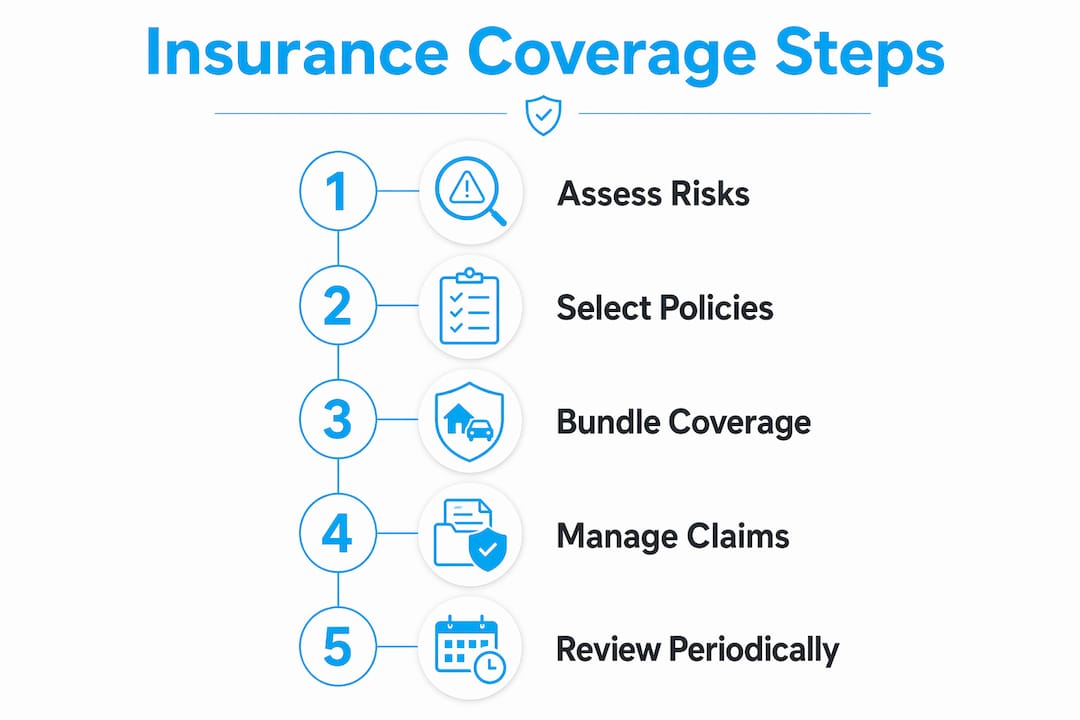
Choosing the right plan starts with an honest assessment of your project’s specific risk profile, not a generic checklist. The factors that drive both your coverage needs and your premiums include project size, location, soil conditions, proximity to sensitive receptors, and the regulatory environment in your jurisdiction.
Key factors to evaluate before approaching carriers:
- Project type and scope: Ground-up construction, redevelopment, and mixed-use projects each carry distinct risk profiles. Redevelopment sites with prior industrial use almost always require PLLP in addition to standard GL.
- Location and environmental history: Sites near wetlands, flood zones, or former industrial operations require Phase I and Phase II Environmental Site Assessments (ESAs) before most carriers will quote pollution coverage.
- Revenue and contract structure: Carriers use projected project revenues as a primary underwriting variable. Have your pro forma ready.
- Regulatory requirements: State and local permitting offices, lenders, and joint venture partners often specify minimum coverage limits. Know these before you negotiate.
- Budget for insurance: Premiums for a full coverage stack on a mid-size commercial project are typically anchored to base minimums: OPPI premiums start around $40,000, CPL premiums start at approximately $10,000, PLLP and combined CPPL policies for redevelopment typically start near $25,000, and Real Estate Developers E&O programs usually require a minimum premium of $10,000. Build this into your pro forma from day one.
A practical checklist for engaging carriers or brokers:
- Compile your project’s site history, environmental reports, and zoning documentation.
- Prepare a detailed project description including scope, timeline, and total project cost.
- Identify all parties requiring additional insured status: lenders, municipalities, joint venture partners.
- Determine which coverages are contractually required versus strategically advisable.
- Request quotes from carriers that specialize in development risks, not general commercial lines.
- Compare not just premiums but coverage terms, exclusions, and claims handling processes.
- Review completed operations terms carefully, especially the extended reporting period (ERP) length.
Bundling policies under one carrier often produces both cost savings and smoother claims handling. When a claim involves overlapping causes, such as a design error that leads to a pollution event, having one carrier eliminates the finger-pointing that delays resolution. You can review commercial real estate insurance requirements to understand what lenders and municipalities typically mandate before you finalize your coverage structure.
Pro Tip: Build and maintain a live risk registry that evolves with your project phases. Carriers and underwriters respond well to developers who can demonstrate active, documented risk governance rather than a one-time checklist. A well-maintained registry can meaningfully improve your policy terms.
What do property developer insurance premiums actually cost?
Premium ranges for development-specific policies vary widely, but you can anchor your budget to published base figures for the major policy types.
Premium benchmarks for key development policies (2026):
OPPI premiums start around $40,000. Project-specific CPL premiums start at approximately $10,000. PLLP and combined CPPL policies for redevelopment typically start near $25,000. Real Estate Developers E&O programs usually require a minimum premium of $10,000.
These are base minimums. Your actual premium depends on a combination of factors that underwriters weigh individually for each project.
What drives premium variation:
- Project revenues: Higher projected revenues signal larger exposure and push premiums up proportionally.
- Coverage limits: A $5 million pollution liability limit costs considerably more than a $1 million limit on the same site.
- Extended Reporting Period (ERP) and completed operations term: Longer tails mean more exposure time for the carrier, which increases cost. Project policies can extend up to 17 years in total coverage, combining a five-year term with completed operations periods of up to 12 years per state statute.
- Site conditions: Known contamination, proximity to groundwater, or prior industrial use all increase pollution premiums.
- Geographic risk factors: Flood zones, seismic activity areas, and wildfire-prone regions carry surcharges on Builder’s Risk and GL policies.
- Claims history: A developer with prior pollution or professional liability claims will pay more, sometimes substantially more, than a developer with a clean record.
Bundling policies under one carrier can generate premium savings where coverages overlap, particularly when combining CPL and professional liability into a CPPL structure. The administrative savings are real too: one renewal date, one carrier relationship, and one claims contact instead of three. For a detailed look at how coverage options compare across policy structures, the commercial property insurance comparison guide breaks down feature differences across policy types.
Risk management practices that strengthen your insurance placement
Strong risk management does more than protect your project. It directly improves the terms carriers offer you. Insurance carriers look favorably on developers that demonstrate thorough, ongoing risk management processes instead of one-time checklists, and that preference shows up in better policy terms and faster claims responsiveness.
Critical due diligence categories every developer should address:
- Title: Confirm ownership, identify encumbrances, and resolve exceptions before committing capital.
- Zoning and entitlements: Verify permitted uses, identify discretionary approvals, and assess political risk for rezoning.
- Environmental (Phase I/II ESA): A comprehensive due diligence process for commercial ground-up development spans 60–120 days and includes environmental assessment as a critical category. Do not skip Phase II if Phase I flags recognized environmental conditions.
- Soils and geotechnical: Unstable soils, expansive clays, or high groundwater tables affect both construction costs and pollution risk.
- Financial pro forma: Carriers underwriting OPPI and pollution policies want to see that your project is financially credible. A weak pro forma raises underwriting red flags.
The Primior Group’s stage-gate framework offers a practical model: release capital only after the project has passed clearly defined evidence-based gates verifying feasibility, budget credibility, and capital sustainability. Applying this discipline to your own projects gives underwriters a documented trail of decision-making that demonstrates you manage risk actively, not reactively.
An active risk registry, one that links specific risks to their potential impacts and the mitigation strategies you have in place, is the single most useful document you can bring to an underwriting conversation. It shows carriers that your risk awareness is current and project-specific, not generic. The RICS Practice Standards for risk management recommend embedding risk governance into the project management process from inception, not treating it as a compliance exercise at the end.
Pro Tip: Engage your insurance broker or carrier early in the project, ideally before you finalize site acquisition. Early engagement lets underwriters flag coverage gaps while you still have time to address them, and it often accelerates policy issuance once you’re ready to close.
Frequently asked questions about property developer commercial insurance plans
What insurance types does a property developer typically need?
Most developers need a combination of General Liability, Builder’s Risk, Workers’ Compensation, and either OPPI or E&O coverage. Projects involving redevelopment or subsurface work also require pollution liability coverage, either PLLP, CPL, or a combined CPPL policy.
How do costs correlate with coverage scope and project parameters?
Premiums scale with project revenues, coverage limits, site conditions, and the length of the completed operations period. Base minimums for OPPI start around $40,000. CPL premiums start at approximately $10,000. PLLP and combined CPPL policies for redevelopment typically start near $25,000, and E&O programs usually require a minimum premium of $10,000. Bundling policies under one carrier can reduce total premium cost where coverages overlap.
What is completed operations coverage and why does it matter?
Completed operations coverage protects you against claims arising from construction defects that surface after the project is finished. Depending on state law, this exposure can extend up to 12 years after completion. Without it, a structural defect discovered years later becomes an out-of-pocket liability.
What exclusions are common in commercial insurance plans for developers?
Most GL policies exclude pollution events, professional errors, and intentional acts. OPPI policies typically exclude claims arising from the developer’s own construction operations rather than consultant errors. Pollution policies often exclude known pre-existing conditions unless specifically scheduled. Always read the exclusions section before binding coverage.
How does risk management affect premiums and claims handling?
Developers with documented risk registries, thorough ESAs, and stage-gate governance processes consistently receive better underwriting terms. Carriers that see active risk management are also more responsive during claims because the documentation trail makes it easier to establish cause and scope.
How do you file a claim on a development insurance policy?
Notify your carrier or broker as soon as a potential claim event occurs, even before you know the full scope of the loss. Most policies require prompt notice, and delayed reporting can jeopardize coverage. Provide all relevant project documentation, site reports, and contractor records. Carriers with in-house claims attorneys can often begin the review process within 24 hours of notice.
Mfandtna helps property developers get the right coverage from day one
Property developers face a coverage gap that generic commercial policies were never designed to fill. Mfandtna, an independent insurance agency with over 30 years of experience, works directly with developers and real estate professionals across the U.S. to build customized insurance programs that match the actual risk profile of each project.
Whether you need builders risk insurance for an active construction project, pollution liability for a brownfield redevelopment, or a full coverage stack that includes OPPI and completed operations protection, Mfandtna can structure a plan that fits your budget and satisfies your lender’s requirements. The agency’s independence means you get access to multiple carriers and competitive premiums, not a single-carrier solution that may not fit your project. Reach out to Mfandtna for a consultation and get a coverage plan built around your specific development, not a template.
Key Takeaways
A property developer commercial insurance plan requires layered coverage across liability, pollution, professional indemnity, and construction phases to protect against the full range of development-specific risks.
| Point | Details |
|---|---|
| Layer your coverage | GL, Builder’s Risk, Workers’ Comp, OPPI, and pollution policies each cover gaps the others leave open. |
| Know your base premiums | OPPI premiums start around $40,000; CPL premiums start at approximately $10,000; PLLP and combined CPPL policies for redevelopment typically start near $25,000; E&O programs usually require a minimum premium of $10,000. |
| Completed operations matter | Liability exposure can extend up to 12 years after construction ends, depending on state law. |
| Risk management improves terms | Carriers offer better policy terms to developers with active, documented risk governance and thorough ESAs. |
| Mfandtna builds custom plans | With 30+ years of experience, Mfandtna structures development-specific coverage across multiple U.S. carriers. |