
What is contractual liability insurance and why does it matter?
Contractual liability insurance covers the financial risks your business takes on when you agree, through a contract, to assume another party’s liability for bodily injury or property damage to a third party. Think of it this way: you sign a contract, you accept a financial obligation that wasn’t yours before, and this coverage steps in to pay if that obligation comes due.
Here’s what this coverage does for you:
- Protects your business from paying damages you agreed to cover on someone else’s behalf
- Applies when a third party is injured or suffers property damage and holds the other contracting party responsible
- Covers the financial consequences of that liability, not the legal fault itself
- Typically exists as a built-in provision within your Commercial General Liability (CGL) policy
- Applies broadly to what the policy calls “insured contracts,” giving you blanket protection
One critical distinction: contractual liability insurance transfers financial risk, not legal fault. The other party remains legally liable to the injured third party. What you’re agreeing to cover is the money damages that result from their liability.
How contractual liability coverage works inside a CGL policy
Since 1986, contractual liability coverage has been automatically included in standard CGL policies. You don’t need to list specific contracts or pay a separate premium for it. That’s what makes it “blanket” coverage.
The CGL policy starts with a contractual liability exclusion, then carves out two important exceptions:
- Liability the insured would face even without the contract
- Liability assumed under an “insured contract”
The second exception is where most of the real-world value lives. An insured contract covers a broad range of agreements, including leases, sidetrack agreements, easements, and any contract where you assume another party’s tort liability for bodily injury or property damage to a third person.
Coverage under the CGL also applies even when you’ve assumed liability for the sole negligence of the other party. That’s a meaningful protection for contractors who routinely sign agreements that shift significant risk onto them. Two conditions must be met: the injury or damage must occur after the contract is signed, and the contract must qualify as an insured contract under the policy’s definition.

Pro Tip: Not every contract automatically qualifies as an insured contract. Before you sign any agreement that includes indemnification language, ask your insurance advisor to confirm the contract falls within your CGL policy’s insured contract definition.
What “hold harmless,” “indemnify,” and “defend” actually mean in contracts
These three terms appear together constantly in contracts, but they carry distinct meanings that directly affect your coverage and your financial exposure.
- Hold harmless means you agree to assume the financial consequences of the other party’s liability. You’re not saying they aren’t at fault; you’re saying you’ll cover the bill.
- Indemnify means you’ll reimburse the other party for damages and defense costs they incur. Critically, indemnify alone does not obligate you to provide a legal defense.
- Defend means you’ll pay for the other party’s legal defense. This obligation only exists if the word “defend” is explicitly written into the contract.
This distinction has real consequences. A contract that says “indemnify and hold harmless” but omits “defend” does not require you to hire attorneys or pay legal fees for the other party. Many business owners miss this and end up either over-insured for obligations they never assumed or under-insured for ones they did. Reviewing contract language carefully before signing protects you from both outcomes. For property owners managing similar exposure, landlord liability coverage follows comparable principles worth understanding.
Practical considerations for managing contractual liability
Managing contractual liability well means knowing what your policy covers and where it stops. Several common exclusions can catch business owners off guard:
- Contracts that don’t meet the CGL’s insured contract definition receive no contractual liability protection
- Coverage may not apply if you fail to comply with the terms of the contract itself
- Certain excluded risks, such as pollution liability or professional errors, fall outside the CGL’s contractual liability provision regardless of what the contract says
- The distinction between named insured and additional insured status affects who actually receives coverage under the policy
Contractual liability coverage works alongside, not instead of, other types of liability insurance. Your general liability policy handles third-party bodily injury and property damage from your own operations. Professional liability covers errors in your services. Contractual liability fills the gap created when you’ve agreed to cover someone else’s exposure. Together, these coverages form a more complete risk management picture for contractors and business owners.
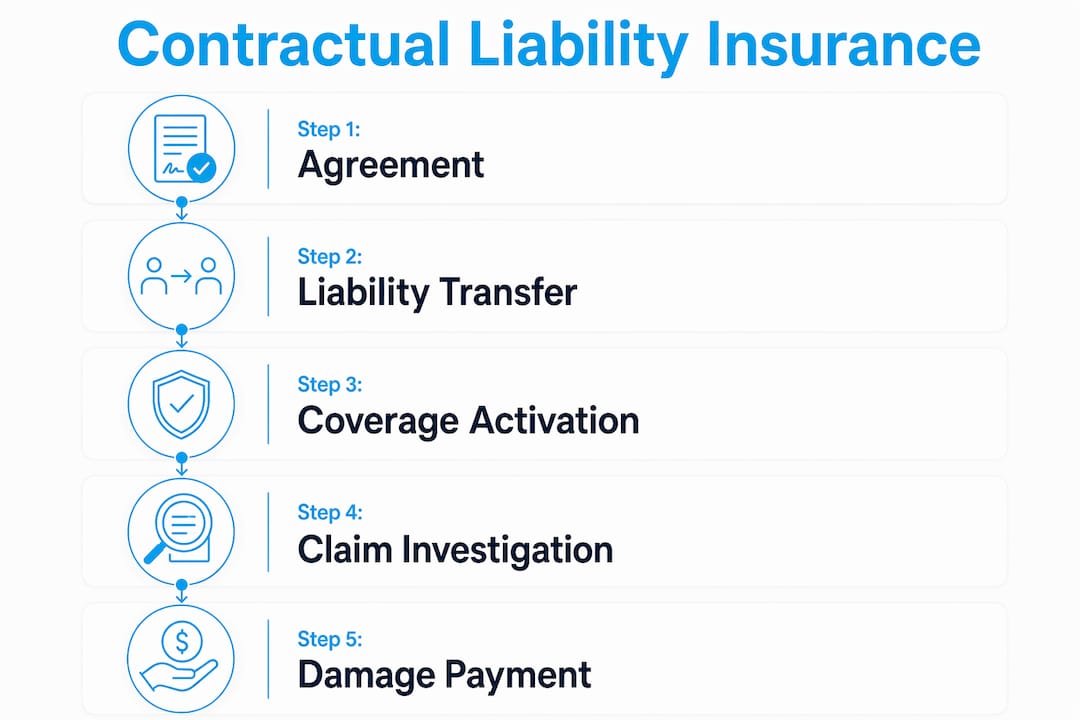
Claims under contractual liability coverage follow the same process as other CGL claims. Your insurer investigates the incident, evaluates whether the contract qualifies as an insured contract, and pays covered damages up to your policy limits. Business liability insurance also covers legal defense costs, which don’t count against your coverage limits under most standard CGL forms.
Key takeaways about contractual liability insurance
Contractual liability insurance protects your business from the financial consequences of liabilities you voluntarily assume through contracts, making it a core tool for any contractor or business owner managing client agreements.
| Point | Details |
|---|---|
| Financial risk, not legal fault | Coverage pays money damages on your behalf; the other party remains legally liable to the injured third party. |
| Automatic CGL inclusion since 1986 | Blanket contractual liability coverage is built into standard CGL policies at no separate premium. |
| Contract language drives coverage | “Hold harmless,” “indemnify,” and “defend” each carry distinct obligations; missing one word changes your exposure. |
| Insured contract definition matters | Not every agreement qualifies; confirm your contracts meet the CGL’s insured contract definition before signing. |
| Mfandtna can help you review coverage | Mfandtna’s independent advisors help business owners and contractors confirm their CGL covers the contracts they sign. |
Real-world scenarios where this coverage applies
Construction is the clearest example. A general contractor working on a municipal building signs a contract agreeing to hold the city harmless for any injuries on the job site. A worker is injured, the city gets sued, and the contractor’s contractual liability coverage pays the damages awarded against the city. Without this coverage, the contractor pays out of pocket.
Tenant agreements present another common scenario. A business leasing commercial space often signs a lease requiring it to indemnify the landlord for injuries occurring within the leased premises. If a customer slips and falls, the landlord’s liability shifts financially to the tenant through that clause.
Service vendors face this regularly too. An IT company contracted to manage a client’s systems may agree to hold the client harmless for any third-party claims arising from the vendor’s work. If a data breach leads to a lawsuit against the client, the vendor’s contractual obligation to indemnify kicks in. Reviewing commercial real estate insurance requirements often reveals these clauses embedded in standard lease and service agreements.
How contractual liability differs from other types of liability insurance
Understanding where contractual liability fits among the broader types of liability insurance helps you avoid gaps in your coverage.
General liability insurance covers third-party bodily injury and property damage arising from your own operations, products, or premises. It does not automatically cover liabilities you’ve assumed through a contract unless those contracts qualify as insured contracts under the CGL.
Professional liability insurance (also called errors and omissions coverage) covers financial losses a client suffers because of mistakes, negligence, or omissions in your professional services. It responds to claims about the quality of your work, not physical injuries or property damage.
Contractual liability coverage responds specifically when you’ve agreed in writing to cover another party’s exposure. The trigger is the contract itself, not your own negligence or a professional error. A contractor who signs a hold harmless agreement needs this coverage even if they did nothing wrong.
Employers liability coverage protects against employee injury claims that fall outside workers’ compensation. It’s a separate exposure entirely, explained in detail for business owners here.
How to get contractual liability insurance and what affects your premium
For most businesses, contractual liability coverage is already included in your CGL policy. The first step is confirming that with your insurance advisor and reviewing the insured contract definitions in your current policy.
If you’re purchasing a new CGL policy or need to expand your coverage, here’s the process:
- Gather your contracts. Bring copies of the agreements you sign regularly, especially those with indemnification or hold harmless language.
- Work with an independent agent. An independent agency can compare CGL forms across multiple carriers to find the broadest insured contract definitions for your industry.
- Review exclusions carefully. Ask specifically about pollution, professional services, and any industry-specific exclusions that could leave contractual obligations uncovered.
- Consider umbrella coverage. For contractors with large contracts, an umbrella policy extends your limits above the CGL’s per-occurrence cap, which matters when damages could be significant.
Factors that affect your premium include your industry and the types of contracts you sign, your annual revenue, your claims history, and the size of the liabilities you’re assuming. Construction contractors typically pay more than office-based businesses because the physical risk of injury on job sites is higher. Builders risk coverage, which you can learn more about at Mfandtna’s builders risk guide, often pairs with contractual liability coverage for construction projects.
Mfandtna helps you get the right coverage for your contracts
Sorting through contract language and policy definitions takes time, and the cost of getting it wrong shows up in the worst moments. Mfandtna is an independent insurance agency with over 30 years of experience helping business owners and contractors across multiple states find CGL coverage that actually fits the contracts they sign.
Unlike a single-carrier agent, Mfandtna shops across multiple insurers to find the broadest contractual liability protections at a price that works for your business. Whether you’re a general contractor managing municipal projects or a service business signing client agreements, Mfandtna’s advisors review your specific contracts and match you with a policy that covers the obligations you’re taking on. Get a free quote at Mfandtna’s insurance quote page and know exactly where you stand before you sign your next contract.