

Builders risk insurance is defined as a specialized property policy that protects a construction project against physical loss or damage from the moment materials arrive on-site through project completion. Also called course of construction insurance, this coverage is purchased by property owners, general contractors, or project managers before a single nail is driven. Carriers like Zurich, Tokio Marine, and Chubb all require a formal application that captures project details, construction timelines, and coverage limits. Getting that application right the first time determines whether your claim gets paid or denied. This builders risk insurance application guide walks you through every step.
What documents do you need for a builders risk application?
Preparation is the single biggest factor in a smooth application. Insurers will not bind coverage until they have a complete picture of your project, and missing documents cause delays that can leave materials unprotected.
Here is what most carriers require before they will review your submission:
- Project location and description: Full address, type of construction (new build, renovation, or addition), and the primary occupancy once complete.
- Estimated completed value: The total cost of the project including labor, materials, and soft costs like architect fees. Builders risk costs typically run 1%–5% of the total construction budget, so your stated value directly affects your premium.
- Construction schedule or Gantt chart: Most insurers, including Tokio Marine Highland, require an up-to-date schedule showing start date, major milestones, and projected completion date.
- Site plans or plot plans: A basic drawing showing the footprint of the structure and its relationship to property lines.
- Insured party information: Legal business name, mailing address, and entity type (LLC, corporation, sole proprietor).
- Proof of ownership or contract: Proof of financial interest in the project is a standard submission requirement. This can be a deed, purchase agreement, or signed construction contract.
- Existing insurance details: If the project owner already carries a commercial property policy, the carrier will want to know how coverage coordinates.
Pro Tip: Create a single digital folder before you start the application. Label it with the project address and drop every document into it as you collect them. Carriers like Chubb often request additional items after initial review, and having everything organized cuts your response time from days to minutes.
Using a builder loan calculator to nail down your total project cost before applying will also help you state an accurate insured value from the start.

How do you fill out a builders risk application form?
Completing the form accurately is where most applications go wrong. Follow these steps to get it right.
-
Enter applicant information precisely. Use the exact legal name of the entity that holds the financial interest. A mismatch between the application name and the contract documents is one of the most common reasons carriers request corrections.
-
Describe the property and construction type in detail. Specify the frame type (wood frame, masonry, steel), number of stories, and square footage. Carriers use this data to assess fire and structural risk, so vague answers trigger underwriter questions.
-
State your coverage limits clearly. Applications require specifying covered locations, values, and limits upfront. Do not understate the project value to save on premium. If a loss occurs and the insured value is lower than the actual cost, you absorb the difference.
-
List all additional insured parties. If a lender, property owner, or subcontractor needs to appear on the policy, name them here. Adding parties after binding is possible but creates paperwork and potential coverage gaps.
-
Request endorsements for specific perils. Standard builders risk policies exclude flood and earthquake. Endorsements for these perils must be requested separately on the application. If your project sits in a flood zone, this step is not optional.
-
Complete any supplemental questionnaires. Supplemental question forms accompany standard applications to clarify exposures like hot work, underground utilities, or proximity to water. Answer every question fully. Incomplete supplementals are the second most common cause of application delays.
-
Review the effective date carefully. Coverage must be active before materials arrive on-site. Set the effective date to match or precede your first material delivery, not your groundbreaking ceremony.
Pro Tip: Have your general contractor review the completed application before you submit it. Contractors catch errors in construction descriptions that owners and project managers often miss, particularly around frame type and square footage.
What are the most common mistakes on builders risk applications?
Even experienced contractors make errors that create coverage gaps. Knowing the most common pitfalls helps you avoid them.
-
Confusing builders risk with general liability. Builders risk covers property damage to the structure under construction. General liability covers third-party bodily injury and property damage claims. They are not interchangeable. Many contractors assume one policy covers both, which is a costly misconception. You can review the differences between coverage types to clarify which policy handles which risk.
-
Overlooking soft costs, waiting periods, and extensions. Neglecting soft costs and policy extensions during application leads to denied or partially paid claims. Soft costs include architect fees, permit costs, and loan interest that accumulate if a loss delays the project. Ask your agent whether these are included or require a separate endorsement.
-
Setting the wrong effective date. Coverage must begin before materials arrive on-site. Coverage starts prior to job site arrival and ends at completion, occupancy, or sale, whichever comes first. Starting coverage after materials are delivered creates an uninsured window.
-
Submitting incomplete documentation. Missing a site plan or proof of ownership stalls the entire review. Carriers will not bind coverage on an incomplete file.
-
Understating the project value. Listing a lower value reduces your premium but creates a coinsurance problem at claim time. Always use the full estimated completed value.
The most expensive mistake on a builders risk application is not the one that gets rejected. It is the one that gets approved with gaps you do not discover until you file a claim.
Pro Tip: Before submitting, read every answer out loud as if you are the underwriter seeing the project for the first time. If anything sounds vague or inconsistent, rewrite it. Underwriters flag ambiguity, and flagged applications take longer to bind.
What happens after you submit the application?
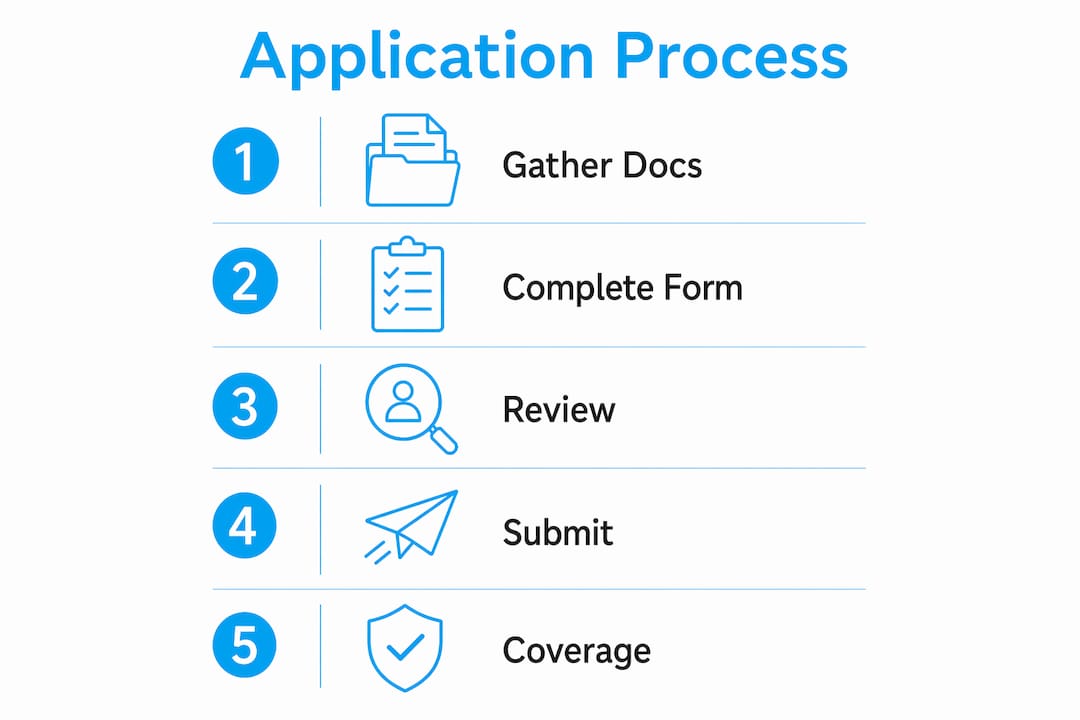
Submission is not the finish line. Understanding the post-submission process helps you manage timelines and keep your project on schedule.
| Stage | What Happens | Typical Timeline |
|---|---|---|
| Initial review | Underwriter checks for completeness and flags missing documents | 1–3 business days |
| Underwriting evaluation | Carrier assesses risk, may request clarifications or site photos | 3–7 business days |
| Quote issued | Carrier provides premium, terms, and coverage conditions | 1–2 business days after evaluation |
| Binding | You accept the quote and coverage becomes active | Same day or next business day |
| Policy issued | Formal policy documents delivered for your records | 5–10 business days after binding |
Once coverage is bound, your responsibilities do not end. Notify your carrier immediately if the project scope changes, the completion date shifts, or a new subcontractor joins the project. Carriers treat undisclosed material changes as grounds for claim denial. If your construction loan interest rate changes and you need to extend the project timeline, that extension must be reported to your insurer as well.
Coverage ends at project completion, first occupancy, or sale. The claims process relies directly on the information in your original application. If your application listed the wrong frame type or understated the project value, those errors will surface during claim adjustment and reduce your payout. Accuracy at the application stage is your best claims preparation.
Key takeaways
A complete, accurate builders risk application is the foundation of every protected construction project, and errors at submission create coverage gaps that no endorsement can fix after the fact.
| Point | Details |
|---|---|
| Gather documents first | Collect site plans, construction schedules, and proof of ownership before starting the form. |
| State the full project value | Understating value reduces premium but creates a coinsurance shortfall at claim time. |
| Set the right effective date | Coverage must begin before materials arrive on-site, not at groundbreaking. |
| Request endorsements upfront | Flood and earthquake coverage must be added during the application, not after a loss. |
| Report project changes promptly | Notify your carrier of scope changes, timeline shifts, or new subcontractors to avoid claim denial. |
What i have learned after reviewing hundreds of these applications
After working with builders and contractors across Massachusetts for years, I can tell you the single most common failure point in the builders risk application process is not dishonesty. It is overconfidence. Contractors who have built dozens of projects assume they know what the form is asking. They fill it out quickly, skip the supplemental questionnaire, and submit. Then a pipe bursts during framing and the claim comes back short because soft costs were never added to the policy.
The builders risk application is not a formality. It is a legal document that defines exactly what your insurer owes you if something goes wrong. Every blank you leave vague is a blank an adjuster will fill in against you.
My strongest advice is to treat the application like a project specification. You would not hand a subcontractor a vague scope of work and expect a perfect result. Do not hand your insurer a vague application and expect full coverage. Work with an agent who specializes in construction insurance, not a generalist who handles builders risk once a year. The difference in outcome is significant.
I also caution contractors not to let the owner handle the application alone. Owners often understate project values to keep premiums low, not realizing the coinsurance consequences. The contractor has the most accurate cost data and the most to lose if coverage falls short. Get involved in the application process even when you are not the named insured.
— Mike
How Mfandtna can help you get coverage right
Mfandtna has spent over 30 years helping builders, contractors, and project managers across Massachusetts secure the right coverage for their construction projects. Getting your builders risk coverage in place does not have to be complicated when you have an experienced team reviewing your application before it goes to the carrier.
Mfandtna works with multiple carriers to find coverage that fits your project size, timeline, and budget. Whether you are building a single-family home in Arlington or managing a commercial renovation in Boston, the team will walk you through every section of the application, flag potential gaps, and make sure your effective date is set correctly. Reach out today for a free insurance quote and get your project protected before the first delivery arrives on-site.
FAQ
What is builders risk insurance?
Builders risk insurance is a property policy that covers a structure under construction against physical loss or damage from fire, theft, vandalism, and weather. It protects the project from the time materials arrive on-site through completion or first occupancy.
Who should be listed as the insured on the application?
The party with the primary financial interest in the project, typically the property owner or general contractor, should be the named insured. Lenders and subcontractors can be added as additional insured parties on the same policy.
How long does it take to get builders risk coverage approved?
Most applications move from submission to binding in 5–10 business days, depending on project complexity and how complete your documentation is. Simple residential projects often bind faster.
Does builders risk cover general liability claims?
No. Builders risk covers property damage to the structure itself. General liability covers third-party bodily injury and property damage claims. Both policies are typically required on active construction projects.
When does builders risk coverage end?
Coverage ends at project completion, first occupancy, or sale of the property, whichever occurs first. You must notify your carrier when the project reaches any of these milestones to avoid paying for coverage you no longer need.